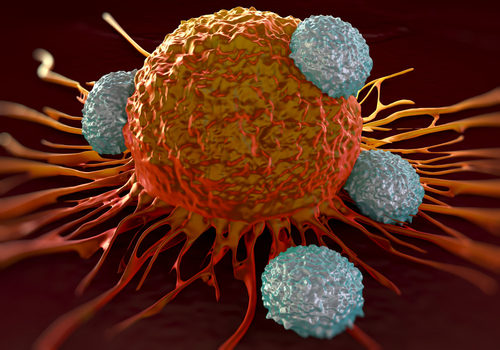

This post was originally published on this site The U.S. Food and Drug Administration (FDA) has granted fast track designation to Triumvira Immunulogics‘ investigational T-cell therapy TAC01-CD19 for the treatment of relapsed or refractory diffuse large B-cell lymphoma (DLBCL). The designation facilitates the development and review process of therapies that can treat severe conditions and…

Category: <span>Blog</span>
Rare Disease Film Festival Highlights Patient and Researcher Unity
This post was originally published on this site Rare disease-themed videos glowed on a large screen before an audience of people in wheelchairs, with crutches, and bearing oxygen tanks this Nov. 9 and 10 in San Francisco. Disorder: The Rare Disease Film Festival strives to eventually host a film about every one of the nearly…
Phase 1 DRGT-45 Trial Doses First Patient With New Oral Formulation of Abiraterone Acetate
This post was originally published on this site A Phase 1 clinical trial testing DRGT-45 — a new oral formulation of abiraterone acetate — in men with prostate cancer has dosed its first participant, the treatment’s developer, Druggability Technologies (DRGT), announced. Abiraterone acetate is a form of hormone therapy already approved for men with advanced,…
Opdivo-Avastin Combo Safe, Has Strong Activity in Relapsed Ovarian Cancer Patients, Phase 2 Trial Shows
This post was originally published on this site A combination of Opdivo (nivolumab) and Avastin (bevacizumab) is safe and has strong clinical activity in women with relapsed ovarian cancer, especially among those whose tumors were sensitive to platinum-based chemotherapy, a Phase 2 clinical trial shows. The study, “Assessment of Combined Nivolumab and Bevacizumab in Relapsed…
CRISPR-edited T-cells Safely, Effectively Target Cancer Cells in Myeloma Patients, Early Phase 1 Data Suggests
This post was originally published on this site A new approach using genetically modified T-cells — via CRISPR-Cas9 gene editing technology — safely and effectively targets cancer cells in patients with advanced multiple myeloma, preliminary data from a U.S.-based Phase 1 study show. Despite their preliminary nature, researchers believe these findings raise hope that this…
CytomX Initiates Phase 2 Trial Testing CX-072, Yervoy Combo in Relapsed or Refractory Melanoma
This post was originally published on this site CytomX Therapeutics has initiated a Phase 2 clinical trial to test a combination of its probody CX-072 — a type of engineered antibody — with Yervoy (ipilimumab) for treating people with relapsed or refractory melanoma. The investigational probody CX-072 and Yervoy, developed by Bristol-Myers Squibb, are two…
Fertility Clinics and Breast Cancer ‘Previvor’ Team Up to Raise Awareness About Genetic Risk of Disease
This post was originally published on this site For patients with gene mutations that increase their risk for diseases such as breast cancer, fertility and in vitro fertilization (IVF) center Shady Grove Fertility (SGF) is offering individualized testing to lower the risk of passing the mutation to their children. To educate patients about such interventions, as…
Study into Way of Detecting Alzheimer’s via Eye Scans Goal of Optina Diagnostics, Wagner Center Partnership
This post was originally published on this site Laying the foundation for what could be a pivotal clinical trial into Alzheimer’s (AD) detection, Optina Diagnostics and Wagner Macula & Retina Center will collaborate on a “real-world” study aimed at advancing Optina’s retinal deep phenotyping platform. “It brings together a whole new paradigm for the way we think…
CA125 Blood Test May Help Alert GPs to Ovarian and Other Cancers, Research Shows
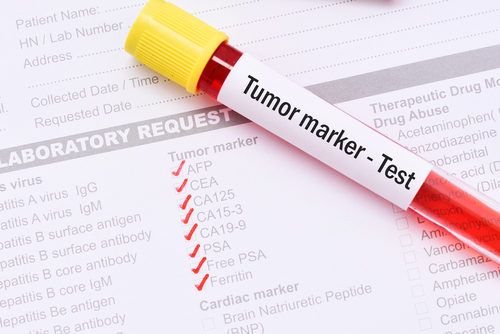
This post was originally published on this site Commonly used in primary healthcare, blood tests for CA125 may help diagnose ovarian cancer and other types of cancer, particularly in older individuals, new research suggests. The findings were described in two presentations at the recent 2019 National Cancer Research Institute (NCRI) Conference in Glasgow, UK. The…
sIL-2R More Sensitive than ACE at Identifying Possible Cases of Sarcoidosis, Study Finds
This post was originally published on this site The soluble interleukin 2 receptor (sIL-2R) is more sensitive and specific than the angiotensin-converting enzyme (ACE), one of the most common diagnostic biomarkers of sarcoidosis, at identifying people who might have the disease, a study found. The findings were reported in the study, “Sensitivity and specificity of…